
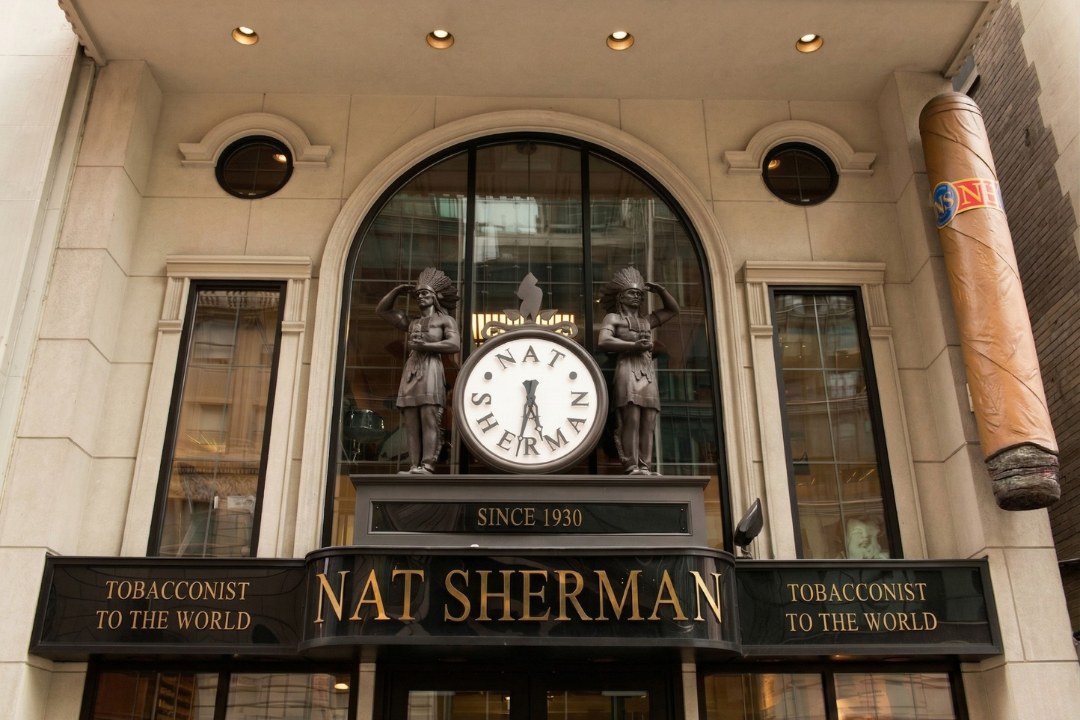
A Storied Past on Midtown’s Most Celebrated Block
Few addresses in New York carry the kind of lived-in mythology that 12 East 42nd Street does. The Nat Sherman Townhouse sat just steps from Grand Central Terminal, one of the most trafficked transit hubs on earth, yet it always felt like a world apart. Inside, time moved differently. The hum of the city faded behind thick mahogany walls, vaulted ceilings, and the slow curl of cigar smoke rising toward ornate Art Deco fixtures.
Nat Sherman himself opened the shop in 1930, right in the teeth of Prohibition, at a moment when New York’s relationship with vice was complicated and colorful. The business took root at a time when midtown Manhattan was reinventing itself, with landmarks like the Chrysler Building completing construction just blocks away and the city’s power brokers moving in force to the neighborhood around Park Avenue and 42nd Street. Sherman understood his customers. He built not just a tobacco shop but a room where influence felt at home, and the city’s most prominent figures responded accordingly.
The Regulars Who Made It a Legend
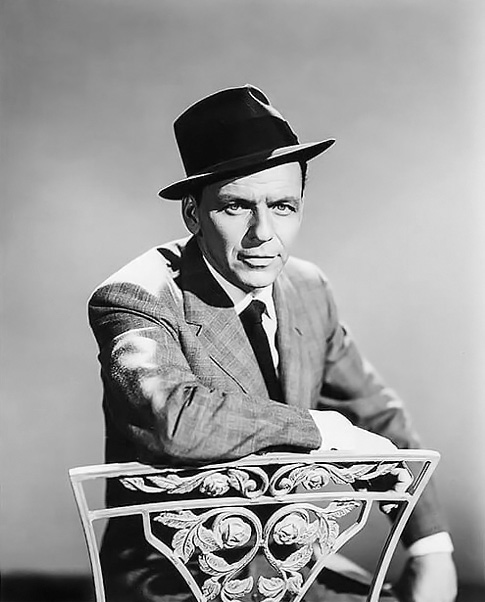
Over the following decades, the townhouse attracted a roster of habitués that read like a mid-century cultural almanac. Frank Sinatra reportedly made regular stops, drawn in part by the shop’s reputation for sourcing exceptional tobacco from Cuba and the Dominican Republic. Humphrey Bogart, whose on-screen persona was inseparable from cigarettes and cool detachment, was another documented frequenter.
George Burns, the comedian who famously treated his cigar as a prop and a punchline in equal measure, kept the shop on his regular circuit for years. Novelist Nunnally Johnson, screenwriter and producer of classic Hollywood films, was among the literary and entertainment crowd that made the townhouse a regular haunt. Even Bill Murray has been cited among the celebrities who visited during the shop’s later decades, maintaining the location’s reputation as a place where creative New Yorkers gathered.
The store operated as a family business through multiple generations of the Sherman family, preserving the original ethos while expanding the product offering and physical footprint.
What Made the Shopping Experience So Distinctive
A Floor Designed for Lingering
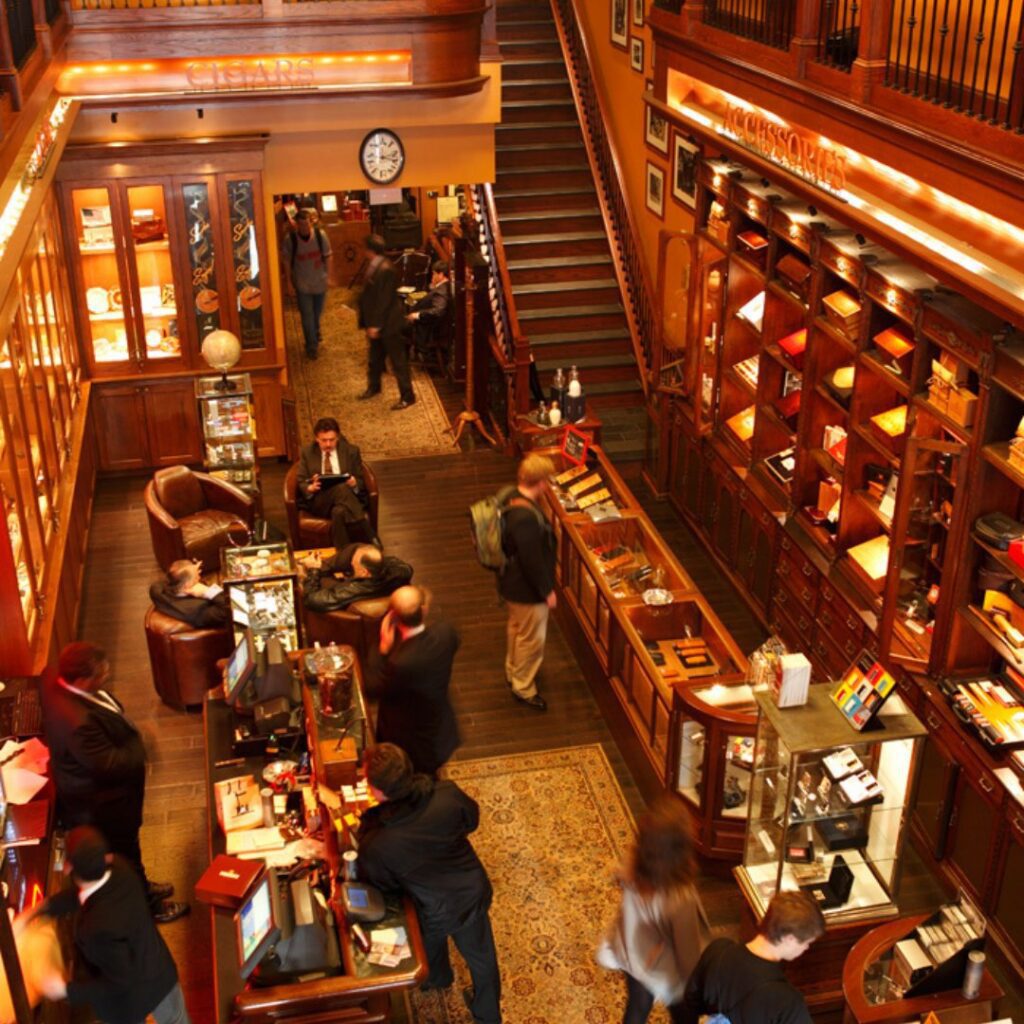
Stepping into the Nat Sherman Townhouse was never a quick errand. The main floor functioned almost like a club in its own right. Nearly 100 pipes lined the display cases alongside more than 15 distinct pipe tobacco mixtures, each blended in-house or sourced from specialty producers abroad. Leather couches anchored the seating areas, and ashtrays were positioned thoughtfully throughout so customers could light up and settle in without feeling rushed.
Longtime manager Cliff Gold became something of an institution himself. Gold understood that the best tobacco retailers do not just move product; they curate relationships. He remembered customer preferences, flagged new arrivals that suited regular tastes, and gave the experience a warmth that corporate retail never quite manages to replicate. Staff turnover at Nat Sherman was notably low for the industry, and regulars noticed.
The Members Lounge Downstairs
Below the main floor sat the Members Lounge, an invitation-only retreat that operated as one of midtown Manhattan’s genuinely exclusive social spaces during its peak years. The lounge housed a grand piano that Harry Connick Jr. played on more than one occasion, and private lockboxes lined one wall where members stored their personal selections. Among the locker holders was Rudy Giuliani, who maintained a presence there both before and during his time as the city’s mayor.
Membership carried real cachet, but the Sherman family never let the exclusivity of the downstairs undermine the openness of the main floor. Anyone who walked through the front door received the same consideration. That balance between accessible luxury and genuine exclusivity gave the shop its particular personality, one that persisted for decades without feeling forced.
The End of an Era
On September 25, 2020, the Nat Sherman Townhouse closed permanently. The closure came against a backdrop of disruption that reshaped midtown Manhattan during that period, as office towers emptied and foot traffic around Bryant Park and Times Square dropped sharply.
For the cigar community and for longtime New Yorkers, the shuttering of the townhouse carried a particular finality. The shop had survived Prohibition, the Depression, multiple recessions, and the transformation of 42nd Street from a rougher corridor to one of the city’s most polished commercial stretches. The 2020 closure felt like it ended something that had seemed permanent.
The physical space itself, with its landmarked architecture and its address at one of the most identifiable intersections in New York, did not stay dormant for long.
A New Chapter: Torches NYC Cannabis Dispensary
Honoring the Space, Reimagining Its Purpose
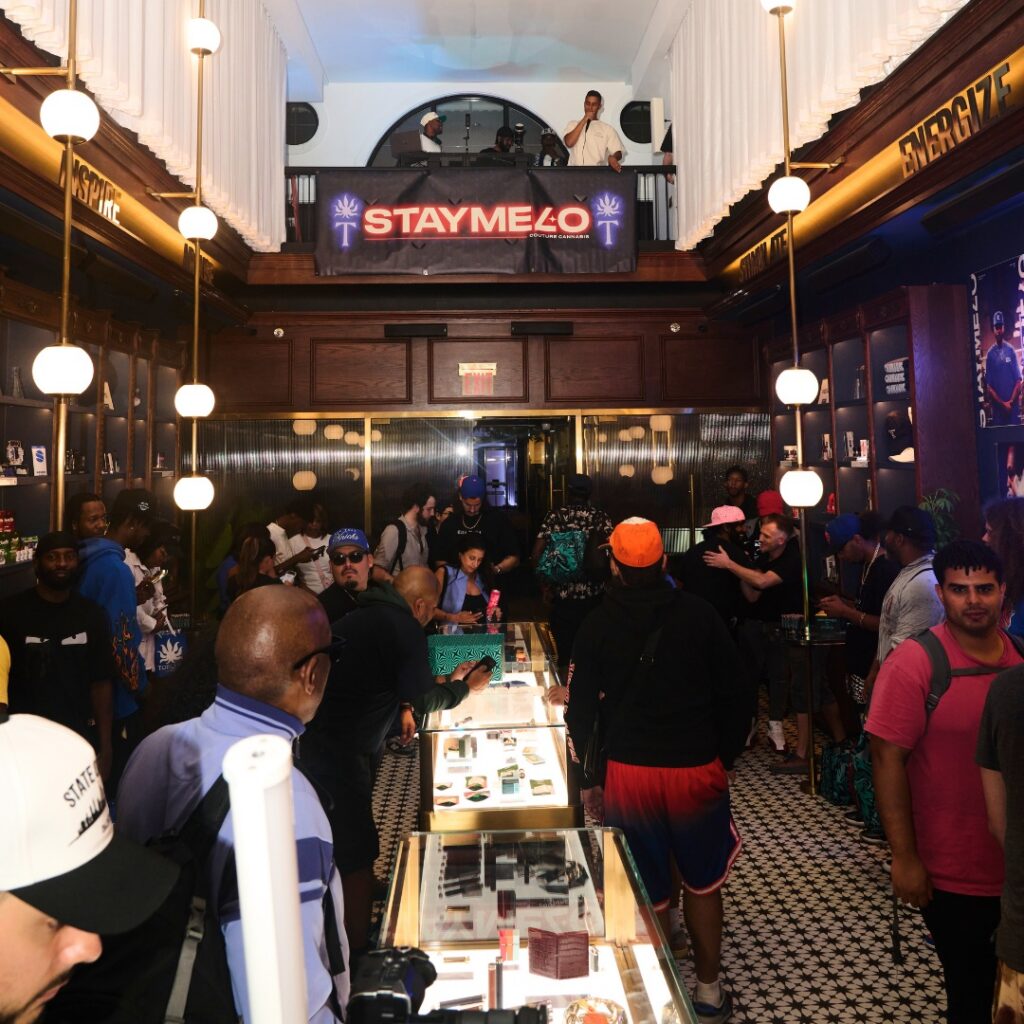
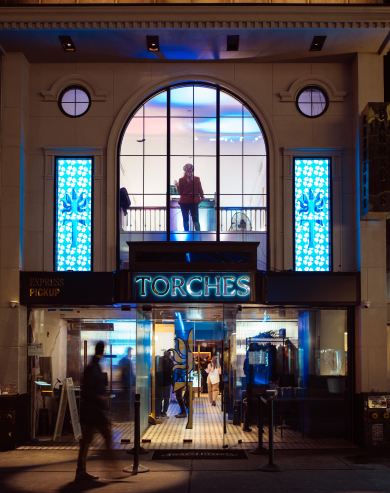
Torches NYC opened its doors at 12 East 42nd Street as one of midtown’s first licensed recreational cannabis dispensaries, inheriting a room with more character than most retail spaces accumulate in a century. The decision to preserve the building’s original aesthetic was not purely sentimental.
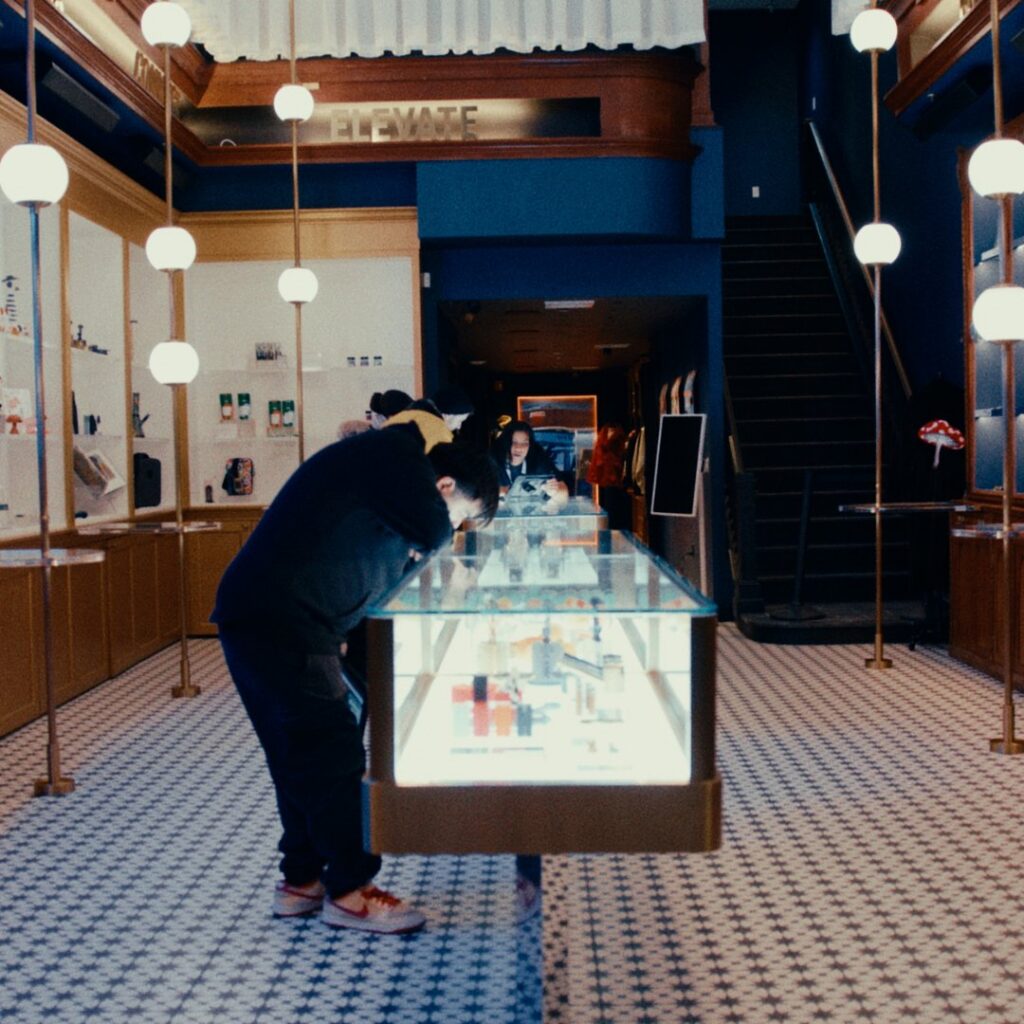
The Art Deco bones, the dark wood millwork, and the generous square footage create an environment that immediately distinguishes a visit to Torches from a trip to a generic storefront. The space does what the Nat Sherman Townhouse always did: it makes you want to stay a while.
The dispensary carries a full selection of cannabis products, from premium flower and concentrates to edibles, pre-rolls, vaporizers, and tinctures. Every product on the floor has cleared New York State’s rigorous lab-testing requirements, and the team updates the selection regularly to reflect what producers across the state are doing well.
A Location That Works for Everyone
The address itself does significant work. Positioned within walking distance ofGrand Central Terminal, Bryant Park, The New York Public Library, and the corridors of Times Square, Torches sits where commuters, tourists, office workers, and neighborhood regulars converge daily. That geographic reach means the dispensary serves a genuinely varied customer base, not a single demographic.
For visitors coming to the city who want to experience legal cannabis in a setting that reflects New York’s character rather than stripping it away, the townhouse location delivers something most dispensaries cannot.
Why This Particular Address Still Matters
The Polanco Brothers: From Queens to 42nd Street
The men behind Torches NYC did not arrive at this address through venture capital or industry connections. They grew up in Jamaica, Queens in the 1990s, in neighborhoods where cannabis was part of everyday life long before any state legislature debated its legality. José Polanco, the license holder and driving force behind the business, came to the United States from the Dominican Republic in 1993 at nine years old, speaking no English. Rather than chasing degrees, he built things: a family construction company, car-sharing operations, and eventually a crew of around 35 employees across multiple ventures.
That track record mattered enormously when New York launched its social equity cannabis licensing program. Applicants needed a prior cannabis-related charge and a documented history of running a business. The program targeted the people most harmed by prohibition. José qualified on both counts.
A Team Built on Shared History
The Polanco Brothers are not strictly all brothers by blood. The name reflects chosen family. Jonathan Santana left a career in finance to bet on legal cannabis. Pedro Antonio, raised partly in Colombia before New York claimed him through hip hop, brings cultural energy and strategic thinking in equal measure. William Evans, the team’s buyer, grew up in the legacy market and carries that knowledge directly into how Torches curates its menu. Together, they applied in the first round of New York’s social equity program, did not get it, came back in the second round in 2023, and did.
Waiting Out MedMen, Building Something Real
Finding a compliant location in New York nearly broke the whole thing. When the team found the former Nat Sherman Townhouse sitting vacant, they knew it was the right space. Its industrial-grade ventilation, originally built for heavy cigar smoke and one of only a handful of its kind in the state, made it structurally ideal for a consumption lounge. But MedMen held proximity exclusivity 860 feet away. The Office of Cannabis Management encouraged the team to walk away. They refused, waited seven months, and when MedMen folded without converting its license, the townhouse became theirs.
They built it themselves. The same family construction company José had run for years handled the renovation, preserving the Art Deco bones while reshaping the space around who they are and who they serve.
The irony woven through all of it is not lost on anyone. The basement lounge where Rudy Giuliani reportedly kept a private cigar locker now belongs to a social equity operation built by Dominican immigrants from Queens. As José puts it, when you accomplish something real, you hand someone else the torch. That is the whole point of the name, and the whole point of the address.
Read the full story in High Times.
Keeping The Story Going
New York has no shortage of cannabis dispensaries, and the number keeps growing as the state’s licensing process matures. What Torches NYC offers that most locations cannot is a setting with a genuine story behind it. The Nat Sherman Townhouse spent nearly a century proving that a retail space can be more than a transaction point. It can hold memory, accumulate meaning, and reflect the city that surrounds it.
That continuity carries forward. The room still commands the same block it always did, steps from the midtown grid that defines so much of the city’s rhythm. The faces have changed, the product has changed, and the culture around consumption has changed in ways Nat Sherman himself could not have anticipated. The spirit of the place, that commitment to quality, to genuine hospitality, and to giving New Yorkers a room worth returning to, remains the same.
Stop by, take your time, and see for yourself what 12 East 42nd Street still has to offer.